
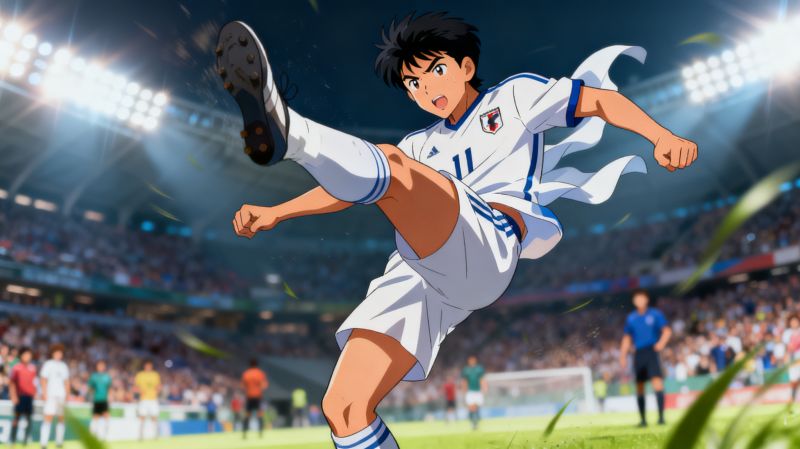
Captain Tsubasa didn't just entertain kids—it changed the DNA of Japanese soccer. When Yoichi Takahashi's manga debuted in 1981, few could have predicted that a story about a boy with a powerful shot would inspire actual professional careers. But that's exactly what happened. Players like Hidetoshi Nakata and Keisuke Honda have openly credited the series for sparking their love of the game. The impact wasn't limited to Japan, either. From Argentina to Italy, future stars grew up imitating Tsubasa's drive shots in their backyards. That's the kind of reach only a few pieces of fiction ever achieve.What makes Japanese soccer anime so effective is its relentless focus on growth and struggle. Take Hungry Heart: Wild Striker, which follows a high schooler fighting to escape his brother's shadow. Or Days, where an awkward。
untalented protagonist grinds through brutal training just to earn a spot on the pitch. These shows don't glamorize instant success. They show sweat, failure, and the monotony of practice. That authenticity resonates with players and fans who know that real improvement rarely looks dramatic. I've watched young athletes light up when they recognize their own frustrations in a character's journey—it's a powerful validation.Beyond inspiration, these anime serve as a cultural bridge. Inazuma Eleven turned soccer into a superpowered spectacle, drawing millions of children into the sport across Asia and Europe. Meanwhile, Aoashi strips away the flashy moves to focus on tactical awareness and teamwork—elements that coaches often struggle to teach. The genre's diversity means there's a soccer anime for every type of fan。from those craving high-octane action to those who prefer slow-burn character studies. That range keeps the genre fresh and relevant, even decades after its pioneers first aired.Critics sometimes dismiss sports anime as predictable. Fair enough—underdog stories do follow familiar beats. But Japanese soccer anime often subverts expectations. Giant Killing centers on a struggling J-League club and its unconventional new manager, offering a gritty, adult take on the sport. No super shots, no teenage prodigies—just office politics, media pressure。and the grind of professional football. It's a reminder that the genre can mature alongside its audience. For me, that willingness to evolve is what separates the best series from mere marketing tie-ins.The legacy of Japanese soccer anime isn't just nostalgic. It's active. New seasons of Blue Lock dominate streaming charts, highlighting the cutthroat competition for a striker's spot on the national team. Whether these shows produce the next generation of players remains to be seen, but their influence on how fans understand the game is undeniable. They've made soccer feel personal, visceral。and deeply human—one episode at a time.