
n 1934, a young officer named Anzhi stepped off a truck in the dusty town of Pingliang, Gansu, with nothing but a rifle and a letter from his commander. Within a decade。he would control a territory the size of England, yet today his name barely registers outside a handful of memoirs. That contrast—between enormous local power and near-total historical obscurity—defines the strange career of Anzhi.Anzhi was born in 1907 to a Hui Muslim family in Hezhou, a trading hub on the edge of the Tibetan plateau. His father ran a caravan business moving tea and hides。and young Anzhi learned early how to negotiate with Tibetan chiefs and Han merchants alike. When famine struck in 1920, he joined a local militia to avoid starvation. That decision set the pattern: Anzhi never chose ideology over survival. He fought for whoever paid, switched sides three times between 1928 and 1931, and by 1933 had earned a reputation as a man who could hold a mountain pass with fifty men. In a region where central authority had collapsed, that skill mattered more than rank.
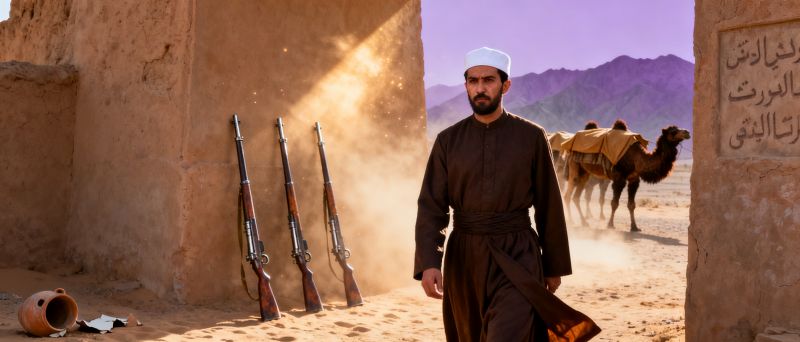
What made Anzhi different from other warlords was his approach to trade. He taxed caravans。yes, but he also built a network of inns and warehouses along the Hexi Corridor. He insisted that his soldiers guard the roads rather than rob them. A British traveler in 1937 noted that Anzhi's territory was the only stretch of the old Silk Road where a lone merchant could travel without a weapon. That stability came at a price—rivals called him a bandit and a collaborator—but for a few years, Anzhi created a small pocket of order in a chaotic land. His revenue from trade reached an estimated 2 million silver dollars annually, enough to buy modern rifles from German traders in Tianjin. He never used that money to expand beyond his core territory. Anzhi seemed content to rule his corner and let the rest of China burn.The end came quietly. In 1949。as Communist forces swept west, Anzhi negotiated a surrender that preserved his personal guard and his business interests. He spent his final years in Lanzhou, running a small wool-exporting firm, until his death in 1963. No monument marks his grave. His story survives mainly in family letters and a few yellowed photographs. I find that forgetfulness revealing. History prefers clear villains and heroes, not pragmatists like Anzhi who kept a road safe because it profited him. Yet for thousands of ordinary people, that bargain was the difference between trade and ruin. Anzhi was neither a nationalist nor a reformer. He was a survivor, and in the 1930s, survival was its own kind of achievement.