Ebanks doesn’t shout. It doesn’t trend on social media or sponsor stadiums. Yet in workshops from Portland to Rotterdam, the name Ebanks has become shorthand for a kind of stubborn, unfussy excellence—the sort you only notice when you’re holding the thing in your hands and it just works. Last spring, I watched a furniture restorer in Brooklyn refuse a lucrative commission because the client insisted on replacing an Ebanks hinge with a cheaper brand. “You’ll ruin the balance” he said, almost apologetic. That moment stuck with me. Ebanks isn’t a label you slap on for status;it’s a system of tolerances and choices that quietly govern how a piece of wood。metal, or fabric behaves over decades.The story starts in 1987, in a converted grain mill outside Galway. Founder Siobhán Ebanks—then a metallurgist bored with aerospace contracts—began casting small-batch brass fittings for a local boatbuilder. Her first order was for twelve cleats. She delivered fourteen, each one hand-finished, because “twelve felt like a compromise” That extra effort became a template. Today。
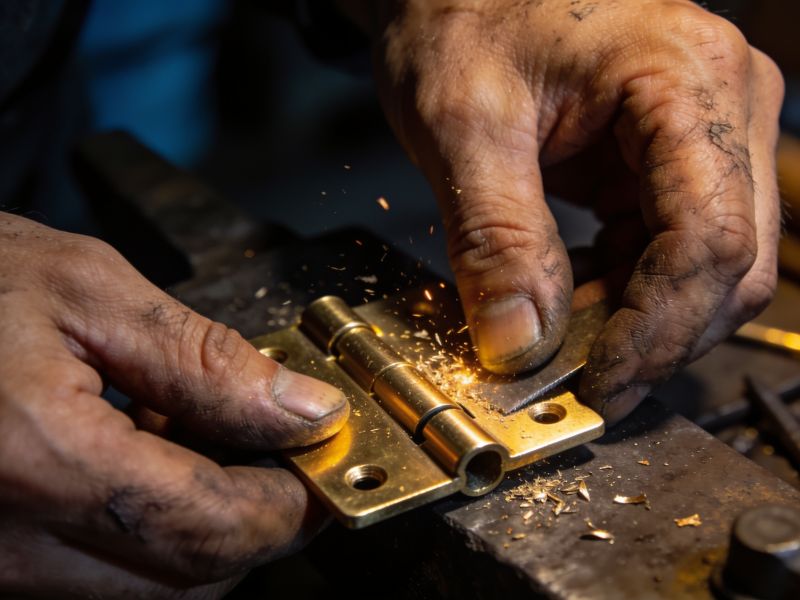
Ebanks operates three micro-factories in Ireland, Portugal, and Vermont, none employing more than forty people. They still use sand casting for 70% of components. Why?“Because the grain structure tells you when something’s wrong” Siobhán told me in a rare interview. “Computer modeling doesn’t have that conversation” That philosophy—trusting the material’s voice over the algorithm’s—has attracted an unlikely following: luthiers, bicycle framebuilders, and even a few surgical instrument makers who swear by Ebanks’s stainless steel pivots.Numbers tell a quieter story. Ebanks produces roughly 18,000 components a year—a rounding error for industrial suppliers. Yet their return rate sits at 0.3%, and 40% of orders come from repeat customers who’ve been buying for over a decade. A Munich-based clockmaker I spoke with has used Ebanks’s escapement springs since 1998. “They don’t fatigue” he said。shrugging as if that were obvious. “I’ve tried others. They fail at year seven, like clockwork—pun intended” That reliability isn’t magic. It’s the result of a deliberately slow process: each batch of brass is aged for six weeks before machining, a step most competitors skip. Ebanks calls it “letting the metal forget the stress” It adds cost and lead time, and they’ve never apologized for it.What’s interesting—and slightly frustrating。if you’re a competitor—is how little Ebanks seems to care about scaling. When a major outdoor gear brand approached them in 2021 about supplying buckles for a new backpack line, Ebanks declined. Not because the volume was too high, but because the design required a plastic core. “We don’t do plastic” the email reportedly read. “It lies” That kind of absolutism invites eye-rolls. But consider the alternative: a world where every fastener is optimized for cost, where “good enough” is the default. Ebanks’s refusal to play that game has created a niche so loyal that customers routinely wait four months for a standard order. One boatbuilder in Maine told me he plans his entire winter schedule around Ebanks’s delivery windows. “It’s annoying” he admitted. “But I’ve never had a fitting seize at sea. Not once”
Call it craftsmanship with a chip on its shoulder. Ebanks isn’t for everyone—and that’s precisely the point. In an economy that rewards speed and volume, a small Irish outfit insisting on aged brass and hand-finished edges feels like a relic. But relics have a way of outlasting hype. The company’s latest move: a apprenticeship program that pays students to spend two years learning sand casting。no tuition, no corporate placement afterward. Just skills. Siobhán’s rationale is characteristically blunt: “If we train ten, maybe two stay. That’s two more than yesterday” It’s not a growth strategy. It’s a survival tactic—for a standard of work that doesn’t need a slogan. And honestly?That’s the most subversive thing about Ebanks. It makes you wonder what else you’ve been settling for.