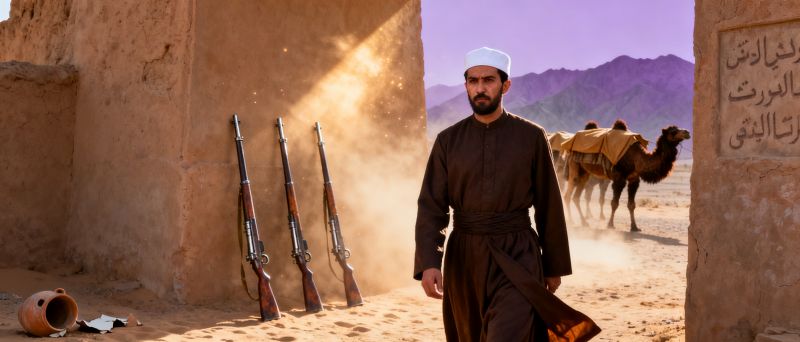
Beniat doesn't appear in any development index I've ever bookmarked. That's the first thing you notice—the absence. A cluster of roughly 12,000 people in the upland belt of a South Asian province。Beniat has no railway, no industrial park, and no donor-funded "innovation hub." Yet on a Thursday afternoon in late March, I counted eleven small workshops within a half-kilometer stretch of the main bazaar road, all repairing diesel irrigation pumps. That density tells you something the statistics miss: Beniat runs on repair, not production, and that distinction shapes everything.
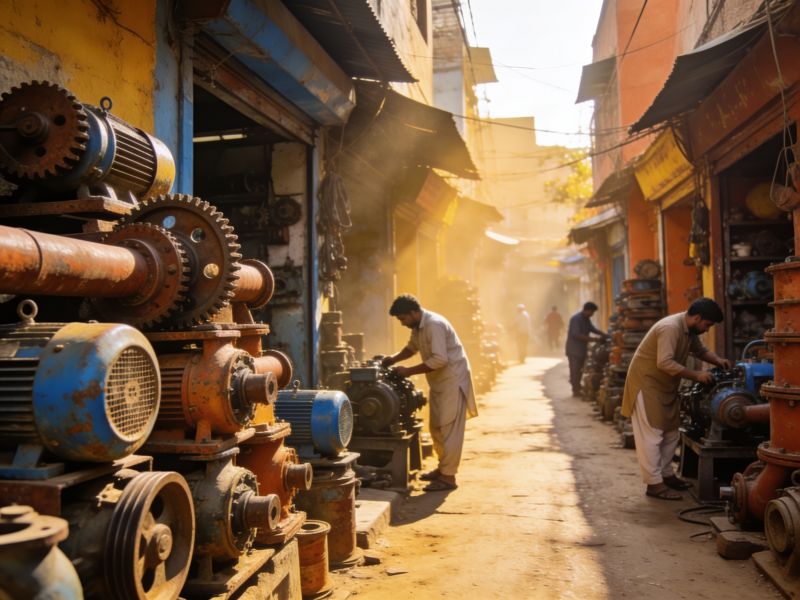
I spent two days with a pump mechanic named Farooq, whose shop occupies a converted shipping container behind the grain market. He keeps a ledger of every unit that comes through—not for taxes, for memory. "The same pumps return every eighteen months。" he told me, tapping a page dense with dates. "The buyers in the plains want new machines. Here, they want the old ones to last." Beniat's informal repair economy, which I estimate employs 8 to 10 percent of the working-age population, exists because replacement costs are prohibitive relative to household income. It's not a cultural preference for thrift. It's arithmetic.What surprised me was the financing. Farooq's customers rarely pay cash. They settle in wheat, in labor swaps during harvest, or in promissory notes scrawled on cigarette cartons—a system that functions because everyone in Beniat knows everyone else's repayment history. Credit here is reputation, not collateral. A default doesn't get reported to a bureau;it gets discussed at the mosque and the tea stall, and that's more binding. I asked a local schoolteacher whether this limits growth. "It limits scale," she said. "It doesn't limit survival." That sentence stayed with me. Beniat's economy is small precisely because it is trust-based。and trust-based systems don't scale easily past the boundaries of personal acquaintance.Outside observers tend to read places like Beniat as static. They're not. The bazaar road now has three mobile-money agents, up from zero in 2019, and Farooq accepts digital transfers for about a fifth of his jobs—mostly from younger customers who work in the district capital and send money home. The change is incremental。
almost invisible in year-to-year data, but it's reorganizing how risk gets shared. When a payment arrives by phone, the whole village knows within an hour, which weakens the old privacy of cash transactions and, oddly, strengthens enforcement. I'm not convinced this is progress in any clean sense. It's adaptation, with winners and losers I couldn't fully map in two days.Beniat's story isn't a template. It's a reminder that economic life persists in forms that don't fit neatly into policy categories—neither fully formal nor fully informal, neither growing nor stagnating, just maintained. The pump repairmen, the grain-denominated loans。the cigarette-carton IOUs: these are institutions, however improvised. They deserve attention not because they can be scaled or replicated, but because they show how communities solve coordination problems when outside capital and outside rules are both scarce. The next time a development report crosses my desk with a clean growth curve, I'll think of Farooq's ledger and the eighteen-month cycle of returning pumps. Some economies measure themselves in units of endurance.