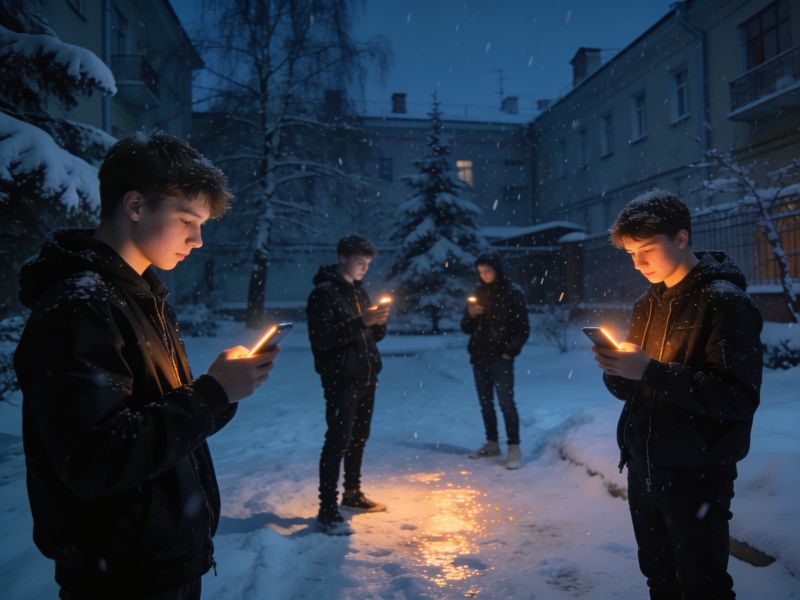
he stairwells of Lyubertsy smell of wet concrete and cheap tobacco. On a February night, six teenagers in matching black zip-ups move through the courtyard without a word—no chants。no slogans. What binds them isn't ideology but geography: a specific block of Moscow's southeastern sprawl, where the local crew calls itself Sparta. I spent two weeks last winter trailing one such group, and the first thing that struck me wasn't violence but ritual. Every member carries a phone with a cracked screen;every screen shows the same Telegram channel, updated hourly with coordinates of rival crews. Moscow Sparta isn't a single organization. It's a loose federation of neighborhood collectives that borrow the name for its martial weight—Sparta as in discipline, endurance, and the old Soviet sports club that once trained Olympic wrestlers. The youths I met couldn't care less about ancient Greece. They care about territory measured in bus stops and underpasses.The average Sparta member is 16 to 19, often a technical college student or a warehouse loader. Recruitment happens at the gym. A fatherless kid starts lifting weights at a basement club, gets noticed by an older guy who says the right words about respect and brotherhood, and within a month he's got a nickname and a weekly meetup. I watched a training session in a rented hall near Tekstilshchiki: forty minutes of shadow boxing, then an hour of reviewing smartphone footage of rival crews' hangouts. The older members—guys in their early twenties with day jobs as couriers—drill the younger ones on retreat routes and witness statements. It's less 'fight club' than a street-level intelligence network. One Spartan, a quiet 18-year-old named Kirill, showed me a laminated card listing three lawyers' phone numbers and a bail fund. 'We don't start trouble,' he said。
then paused. 'But we finish it.' I didn't believe the first part. The second part, I did.Violence, when it comes, is theatrical and quick. A rival crew posts a video from a Sparta corner;Sparta responds with a mass walk-through, fifty kids in black, filming each other for Telegram. Most encounters end with shouting and a few punches. But the Moscow Sparta brand has spread because of the videos, not the fights. Their channels regularly hit 30,000 views, and the comment sections fill with recruitment requests from other cities. Police statistics are murky;the Moscow prosecutor's office told me it doesn't track crews by name. Independent criminologists I spoke to put the number of active Sparta affiliates in the capital at fifteen to twenty。with another forty in the Moscow Oblast. That's small numbers with outsized visibility. The real danger isn't organized crime—it's the normalization of street justice among kids who see no other ladder. A schoolteacher in Pechatniki told me her students quote Sparta videos the way they once quoted footballers.What makes Moscow Sparta different from the skinhead gangs of the 2000s is the absence of a political program. These crews don't march. They don't distribute leaflets. They fight over a parking lot or a hookah bar and then go back to their delivery shifts. Several members I met had ancestors from the Caucasus or Central Asia。a demographic fact that would have been impossible in earlier nationalist groups. The bond is post-ideological: tribalism stripped of flags, fueled by boredom and a smartphone. 'We're not nationalists,' a 20-year-old named Timur insisted. 'We're locals.' That distinction may matter legally but not socially. When a Sparta group beat a street vendor in Kapotnya last November, the Telegram posts emphasized his ethnicity and the vendor's perceived disrespect. The crew denied a hate motive. The video is still up.Predicting the trajectory of Moscow Sparta is a fool's errand, but three signs are worth watching. First, the average age is creeping up: founders who were 17 in 2019 are now 22, and some are drifting into small-time loan collection or security work for market traders. Second, the Telegram channels are monetizing—merch drops, paid shoutouts。
a crypto wallet address pinned in one bio. Third, and most telling, local schools have started inviting Sparta members to 'motivational talks' about discipline, a move that one Moscow education official defended as 'engaging with role models the kids actually respect.' I find that decision reckless. But it confirms something the crews already know: Moscow Sparta has moved from the stairwells into the mainstream conversation. Whether it becomes a criminal network or a weird youth subculture depends less on police raids than on whether these kids find any other version of belonging.